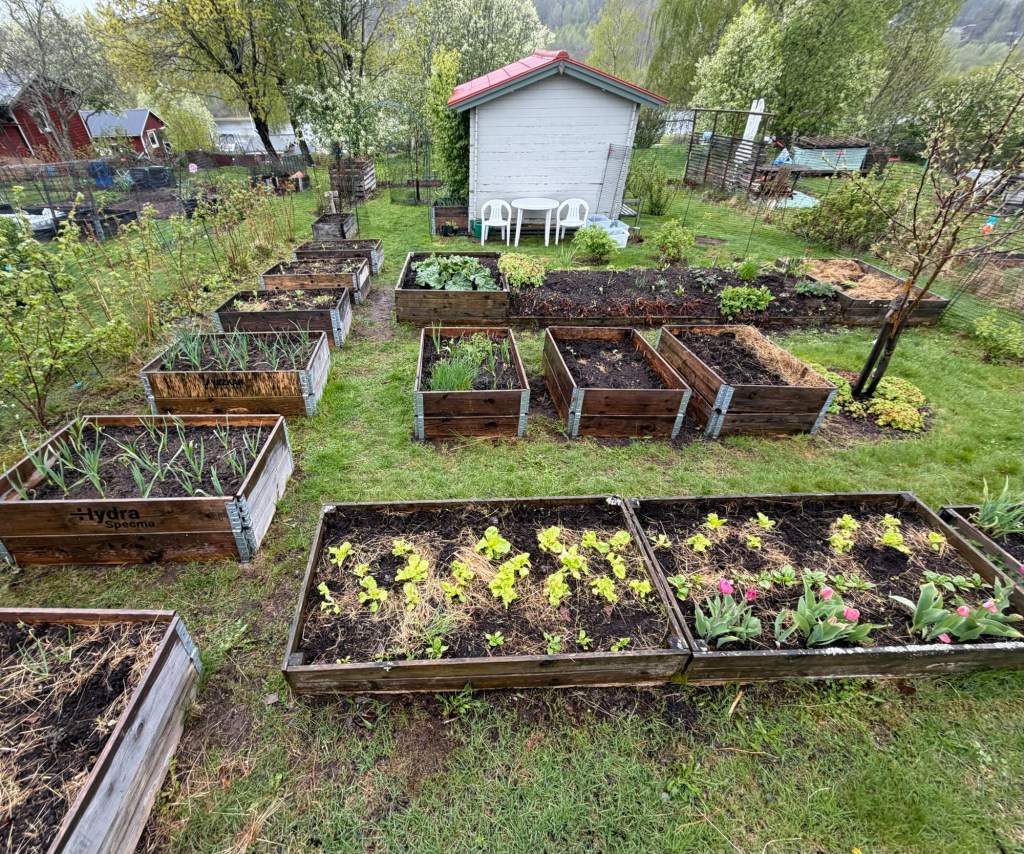
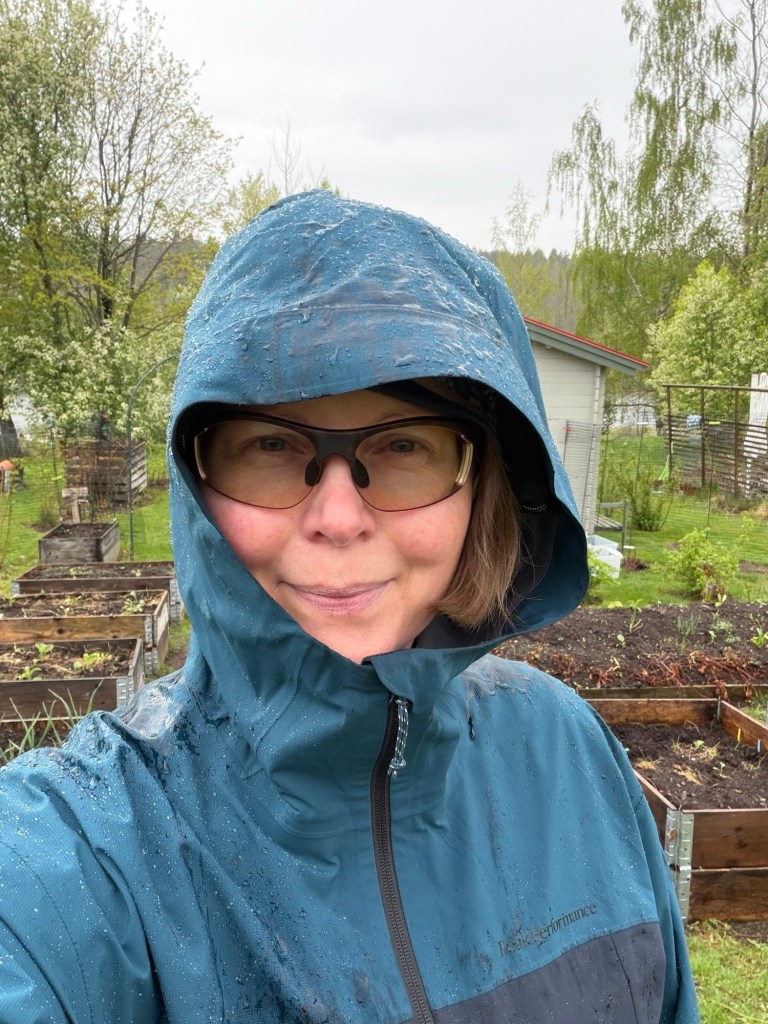
Welcome to the weekend coffee share! I hope you’ll join me for coffee at my allotment? It isn’t very warm, but I can lend you an extra jacket.
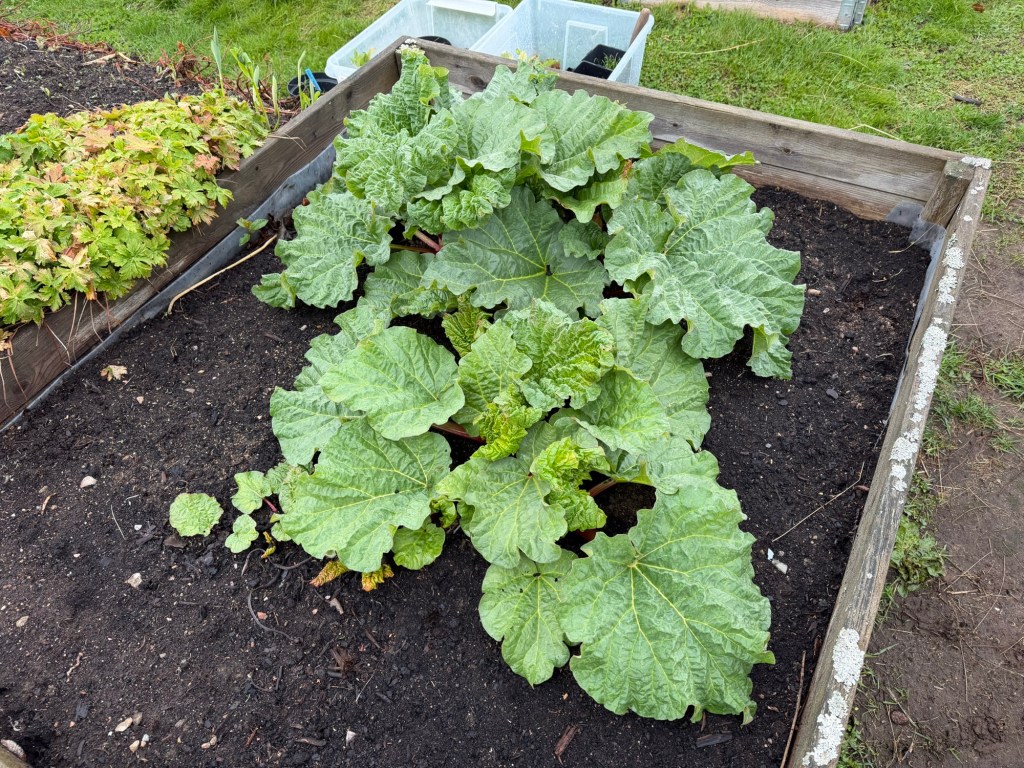
Yesterday (Saturday) was actually the first day I spent time at the allotment this week, due to allergies. My allergies have been challenging this year, I’d rather not talk about that..Yesterday it rained and it was a great day at the allotment.
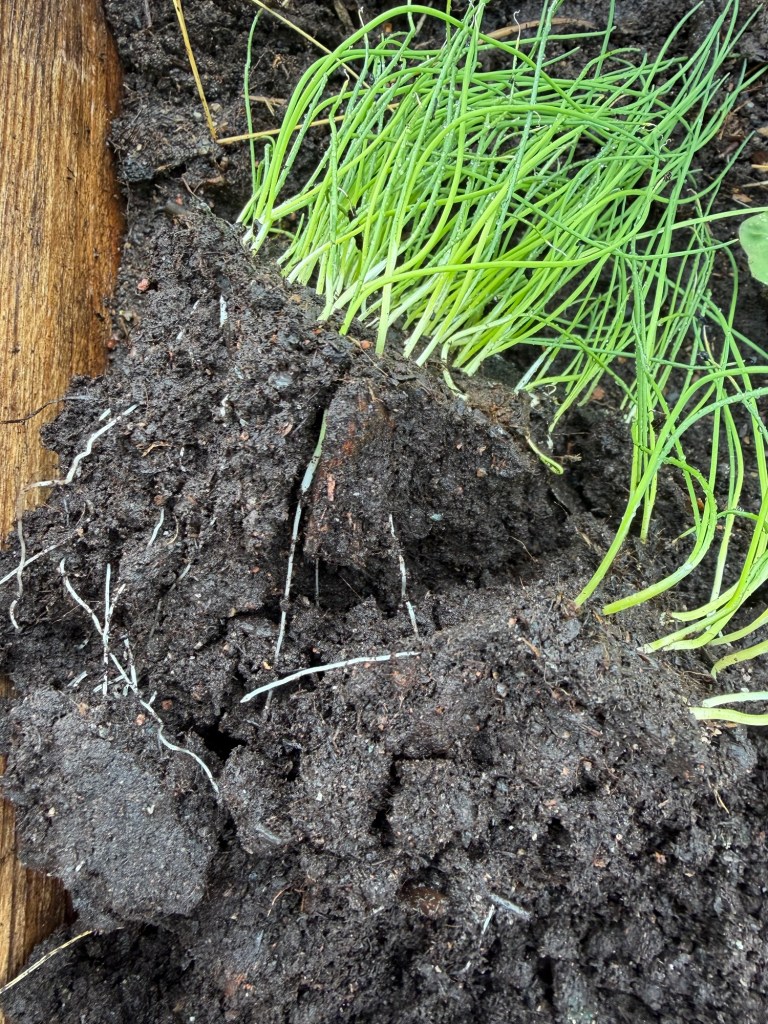
One of the most important things I did at the allotment yesterday was transplanting leeks that I started in pots outside, to the garden beds. Rainy days are perfect for transplanting seedlings.
When using cold sowing technique it is common to do broadcast sowing, spread a bunch of seeds over an area, often in some kind of pot (like I did). When it is time to transplant the seedlings you make sure to water them thoroughly, after that I usually gently turn the pot upside down taking everything out (all the soil and seedlings). I place the seedlings on a flat surface, usually the garden bed I am planning on planting them in. If I have watered them enough it is easy to separate the seedlings from each other without doing them any damage. If it is difficult, I water some more, until it is easy to separate them. When separated they are planted individually. One small pot can house hundreds of seedlings this way. It saves a lot of space.
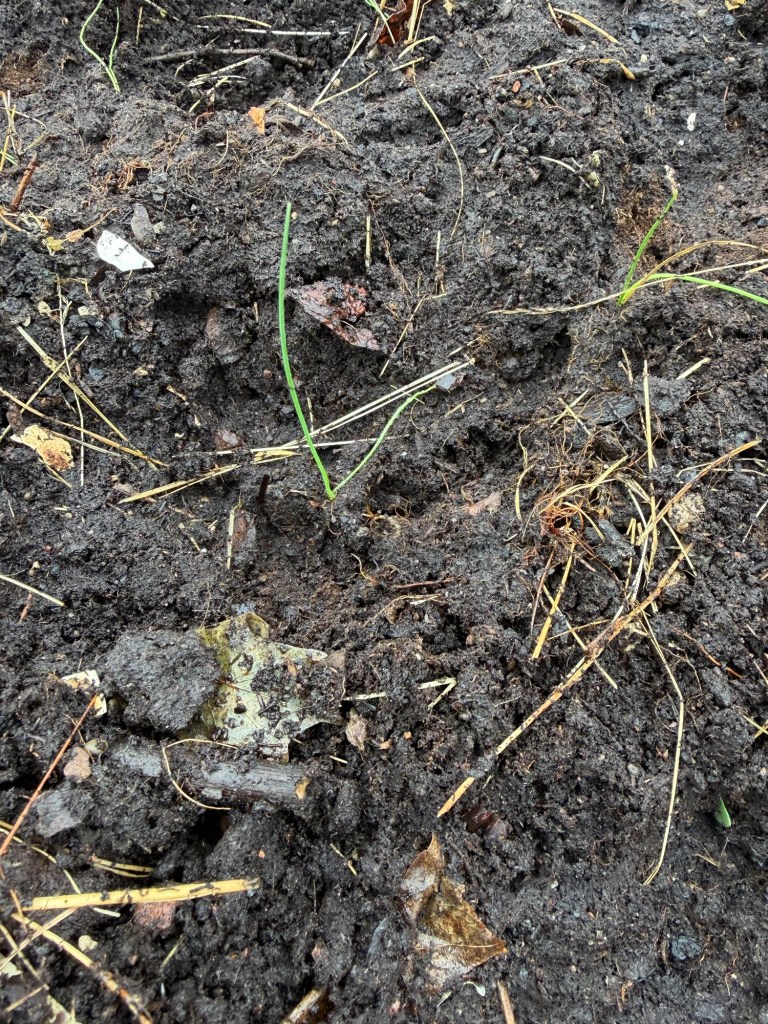
I love gardening, but I do things as easy for myself as I can. It is very much “learning by doing”, trial and error.. When it comes to growing leeks I skip many of the steps traditional gardeners take, like starting them inside and transplanting them 2-3 times into bigger pots before they are being planted outside. I simply pot soil in a few pots, spread some seeds over them, add moisture (water/snow) and keep them at my balcony until it is time to transplant them into the garden beds outside. It works (see the proof from last year here,) so why bother with all the other steps? I use this method for most plants in my garden, but perhaps the amount of space you save in combination with the amount of food you get is most drastic when it comes to growing leeks.
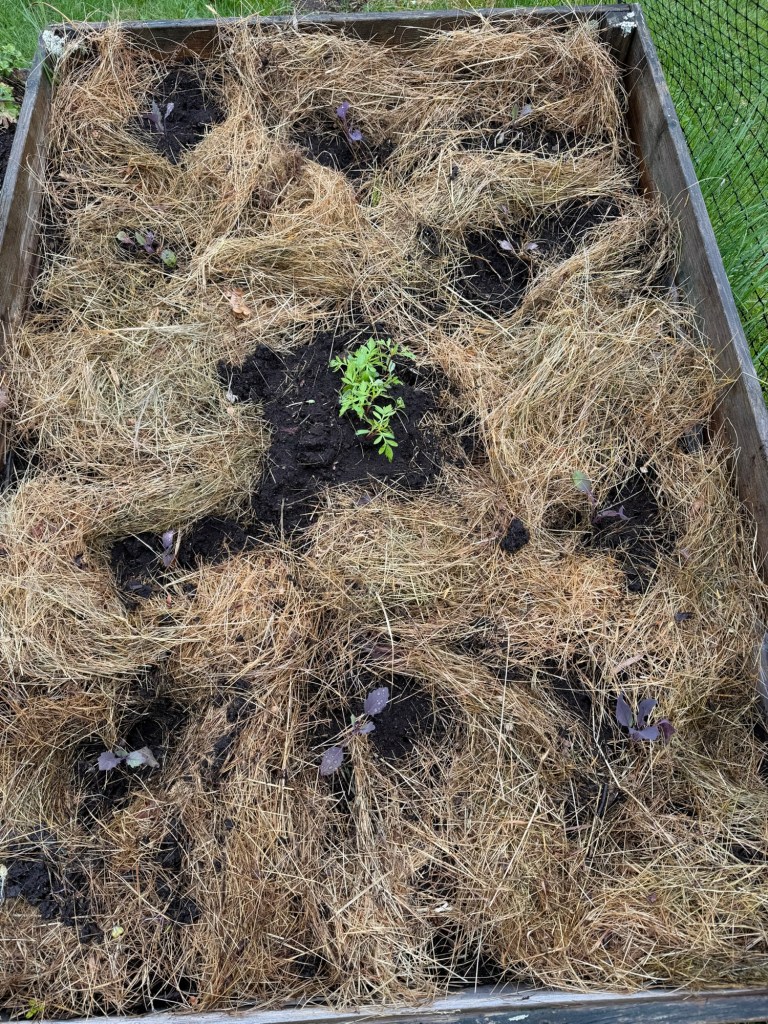
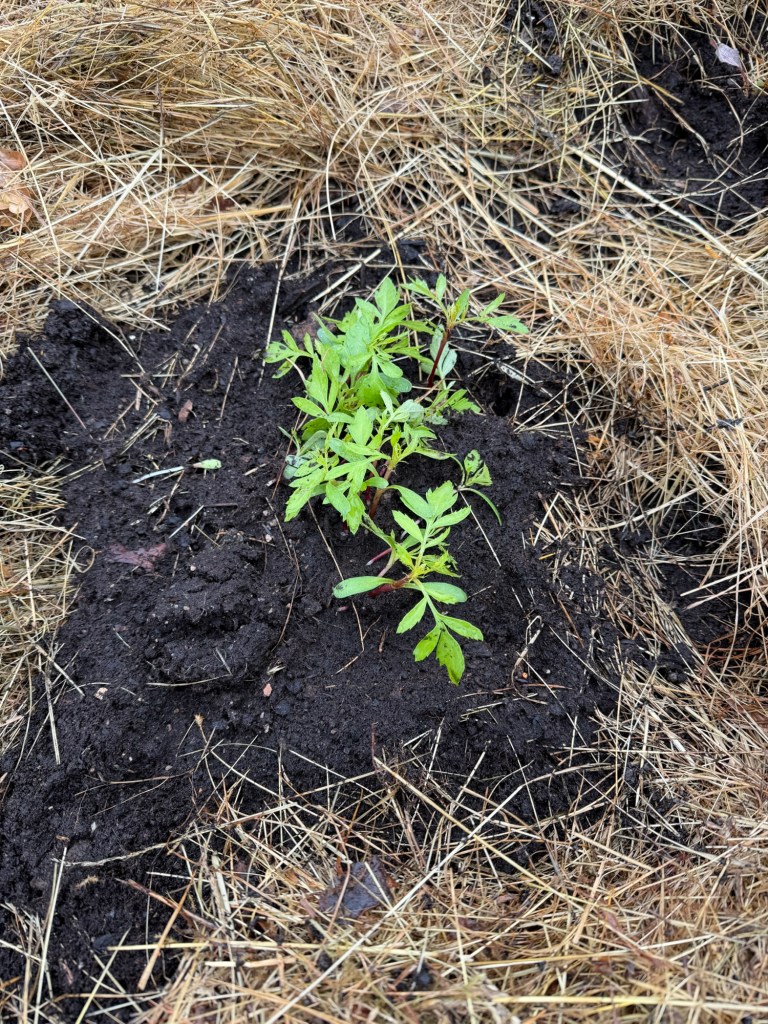
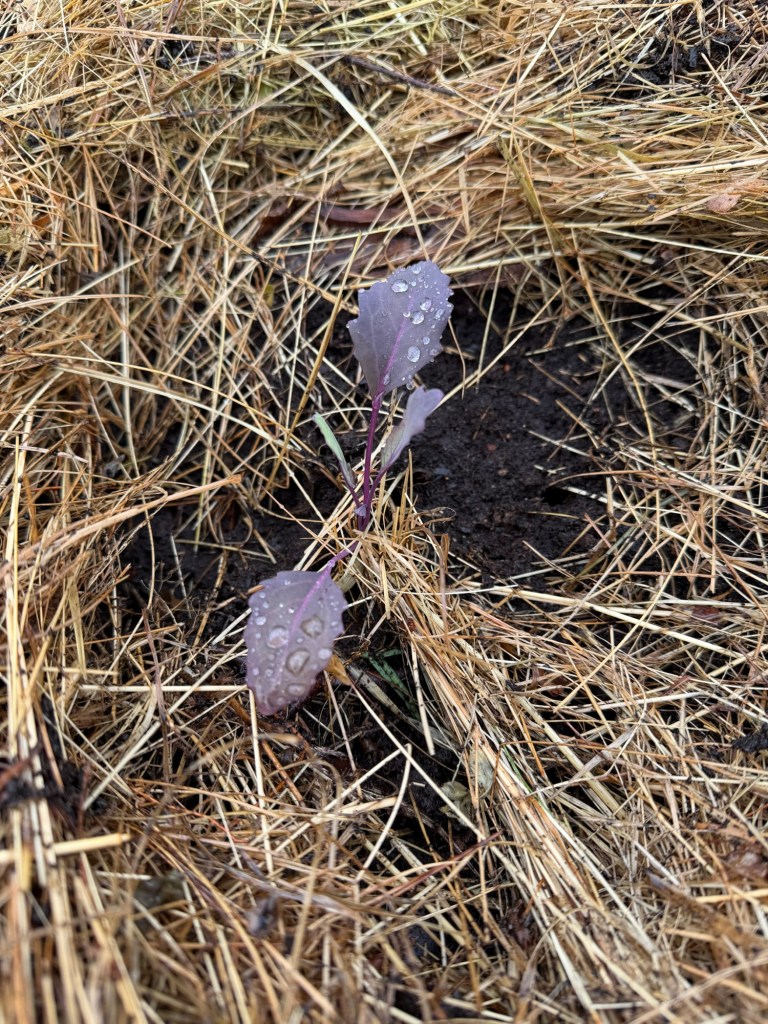
I’ve planted kohlrabi in this bed (above), using the exakt same technique. I planted French marigolds in the middle to attract pollinators and help deter pests. I started the marigolds the same way, outside at my balcony.
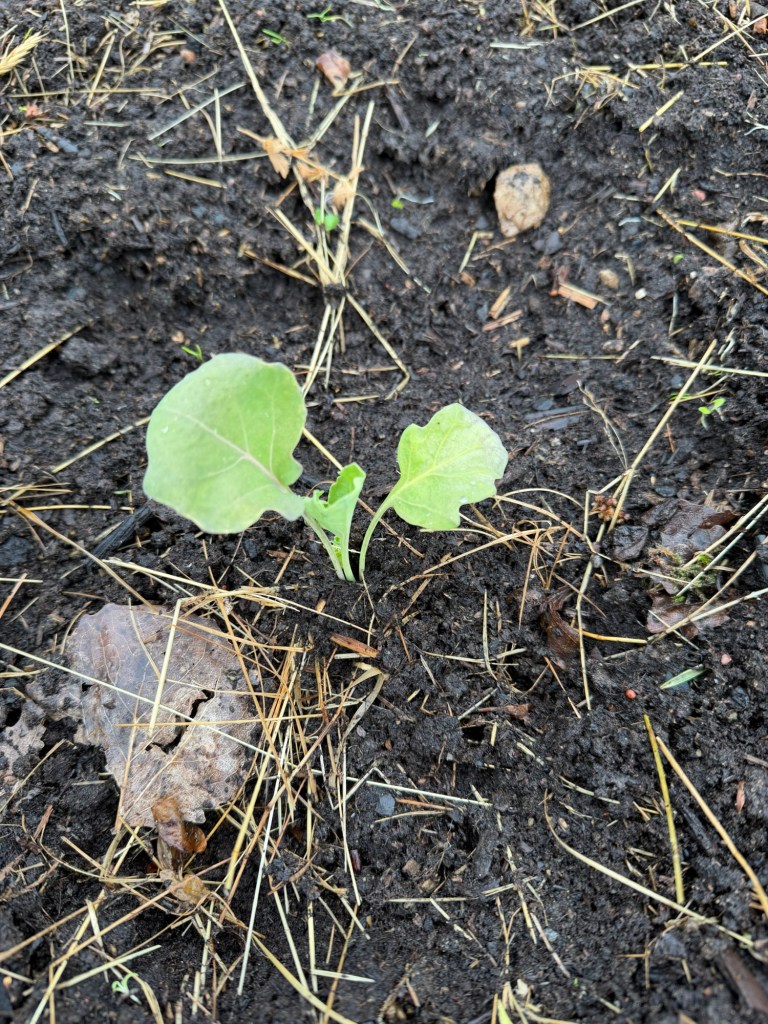
Would you like a refill on your coffee?
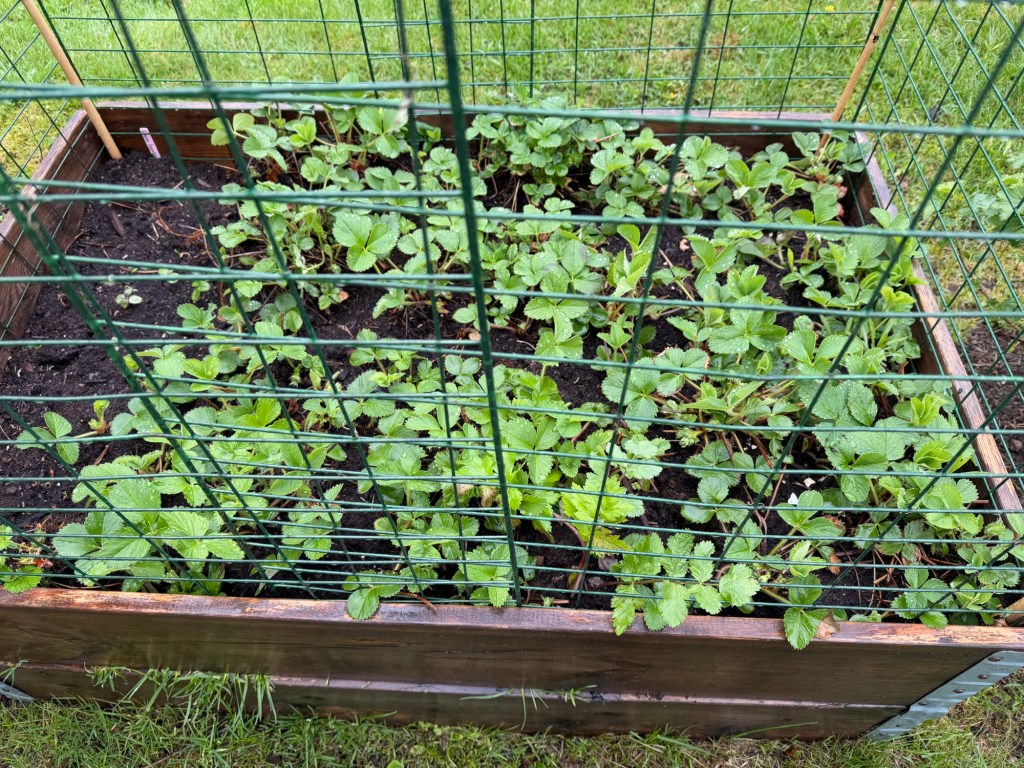
Most of my raised bed are in the fenced in garden area behind my garden shed. The are in front of the shed is not fenced in, in that area I try to protect what needs to be protected with individual solutions, depending on needs. In the front garden I have red currant bushes, black currant bushes, raspberry bushes, strawberries, some herbs, annual flowers, a plum tree, and a small bed with perennial flowers. The photos below are from that front garden.
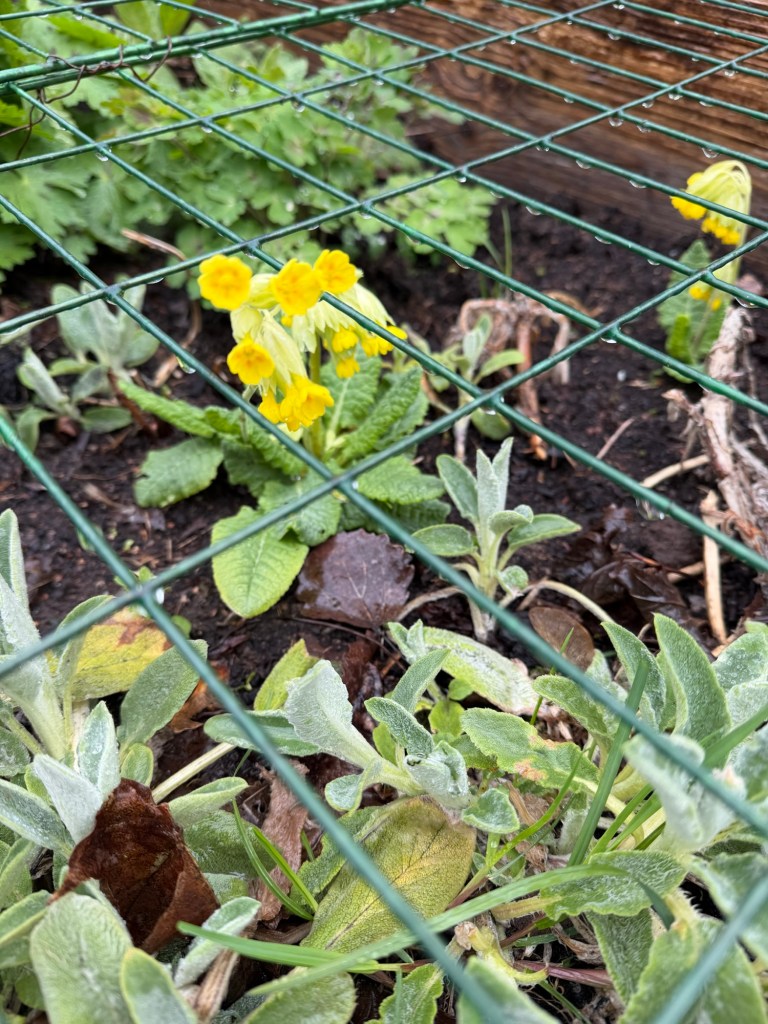
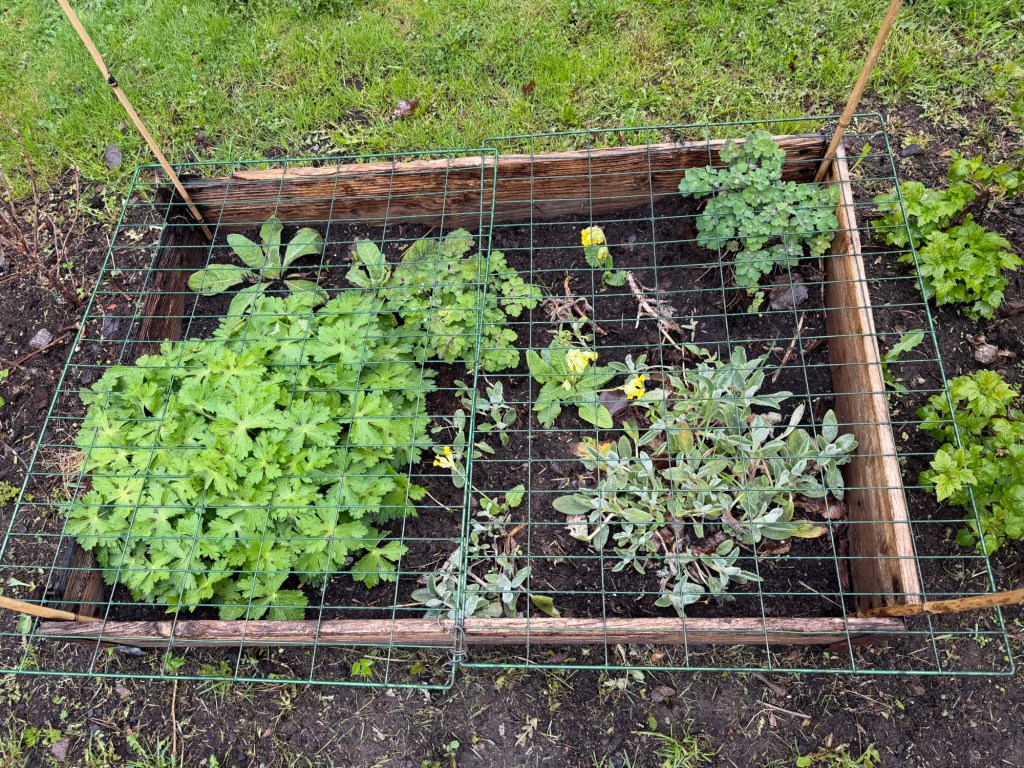
This is a new bed with perennial flowers (above and below). I might not need to protect it when it is fully established, but for now I don’t take any chances.
How is your week? Are you enjoying the weekend? Is it spring in your neck of the woods?
Thank you Natalie for hosting the weekend coffee share!
Maria


 GreenDreamsSweden
What’s on your mind today?