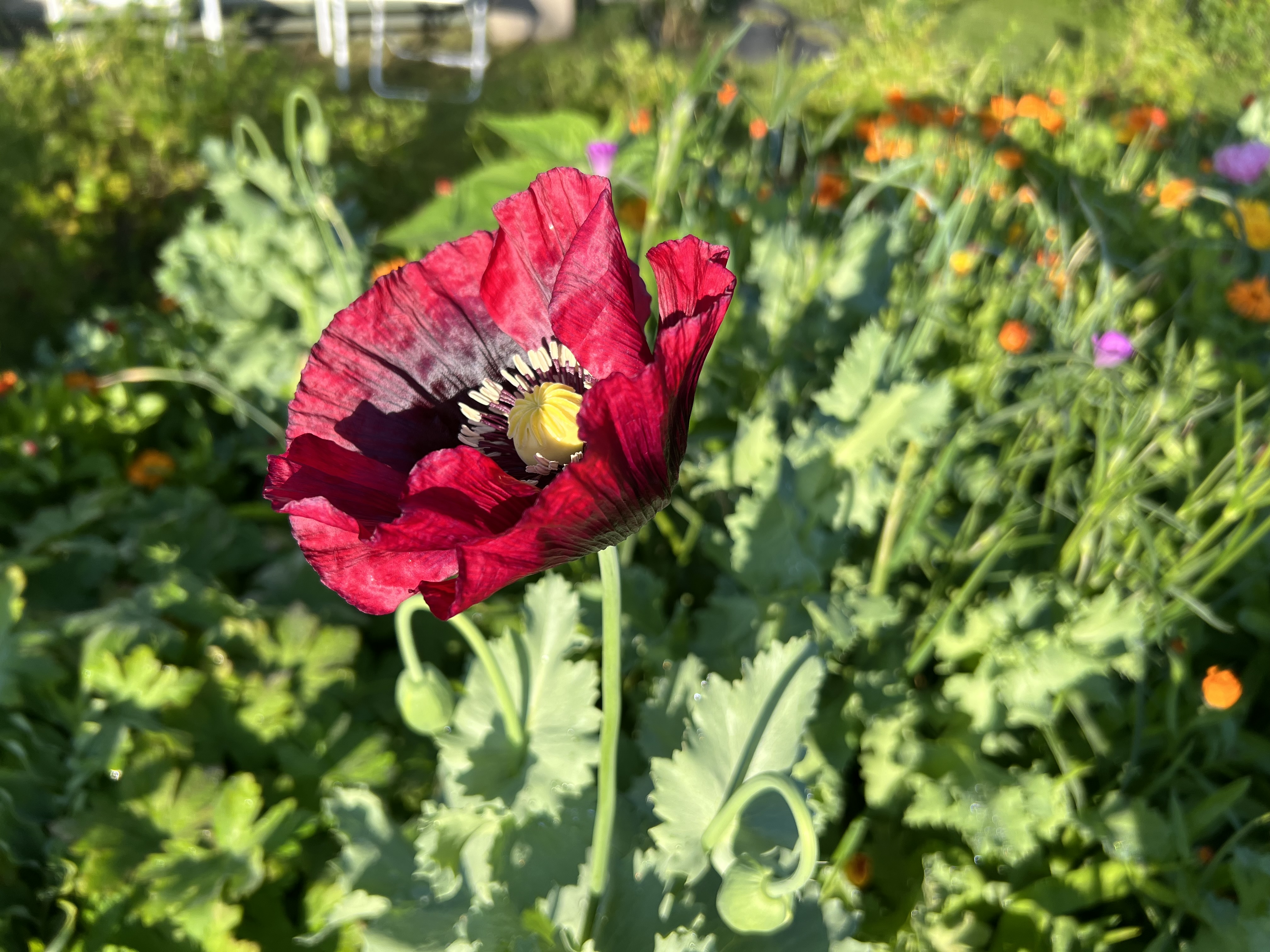
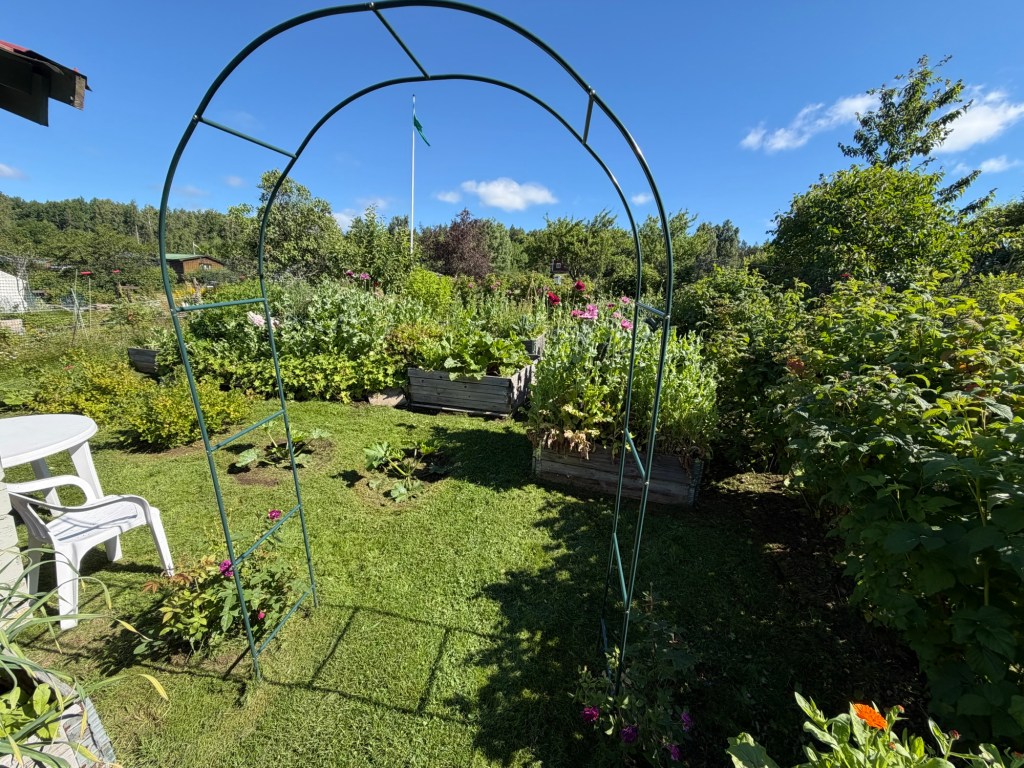
It’s the weekend! I’m so happy you’re joining me for some coffee and conversation. Can I get you some coffee? Or tea? How is your week so far? I just started a three week long vacation. It is slightly shorter than usual, since I took some extra days off for school during the spring semester, and I will take some more days off for school this fall. Three weeks is still plenty! I am so grateful.
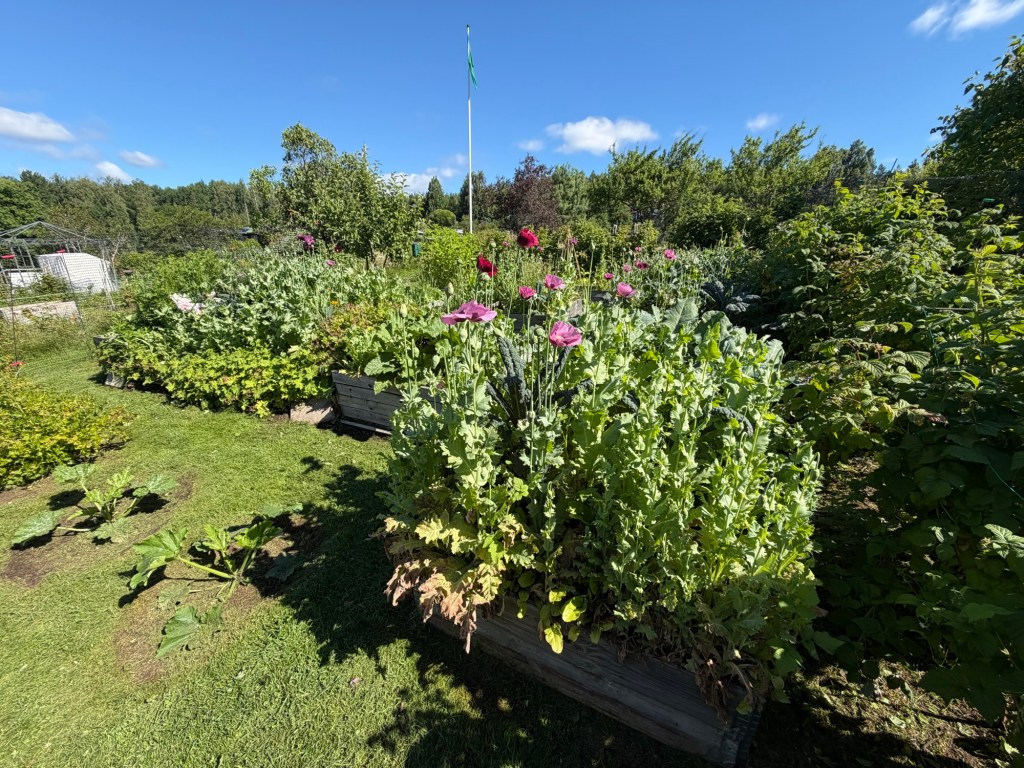
Are you on vacation? Have some time off this summer? The photos in this post is from a visit to my allotment garden this morning. There is always things to do here and it is never finished, a constant work in progress. I love it!
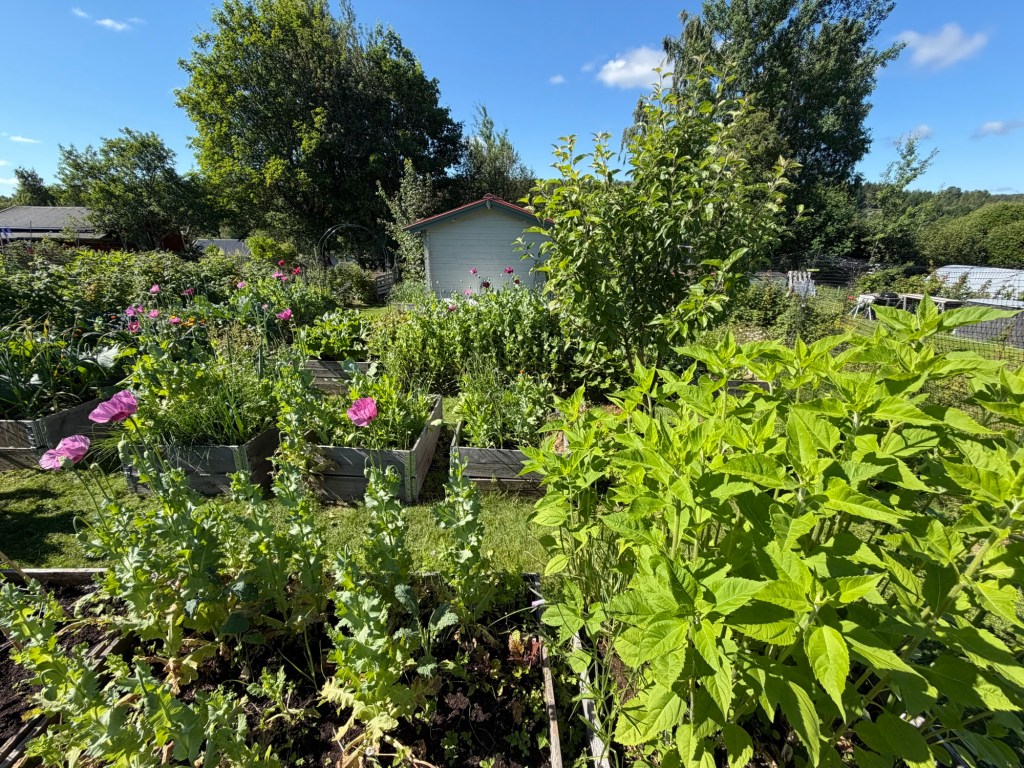
I am trying to show the allotment form different sides, it can look so different depending on where you stand. This is the main garden. The main garden is at the back side of the allotment, but there is also a smaller front side, that I rarely show. I will work with the front garden this coming week, and share some photos from it later on.
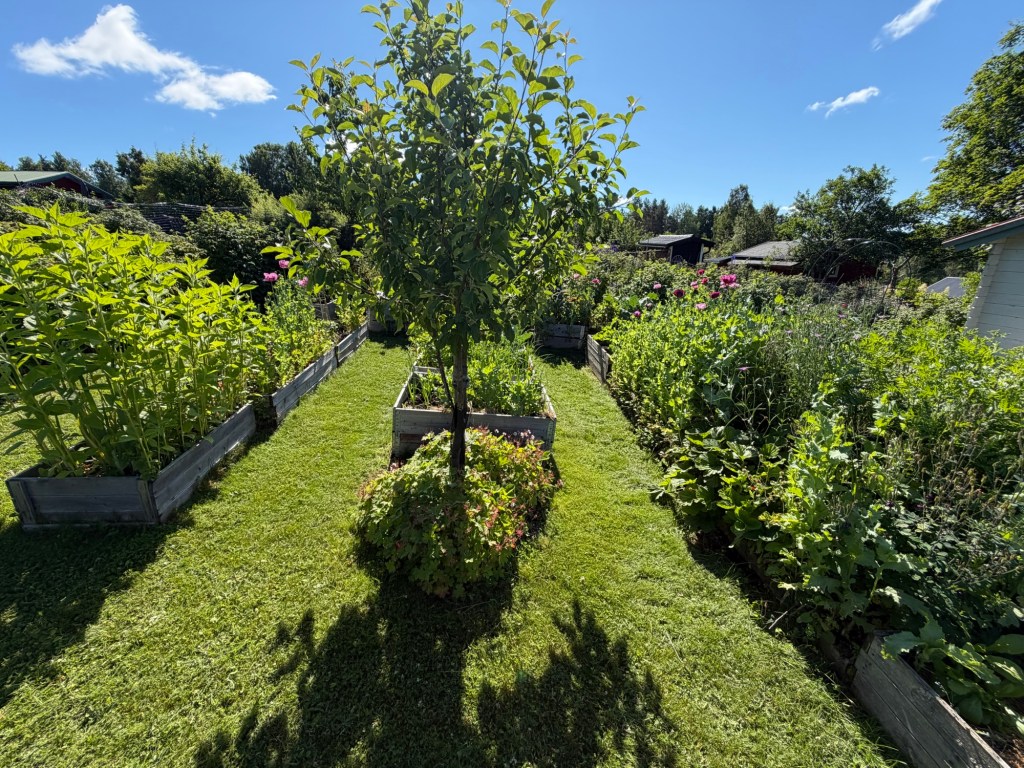
This is on the left side, in the middle of the garden area, where I planted an apple tree a few years ago. It gave us plenty of apples last year, but this year some deer chewed on many of the branches and I had to perform some “emergency surgery” on the tree. It looks like the tree is going to make it, but I don’t think we’ll get any apples this year. That’s ok, many of my friends have apple trees and I will not be without apples in the fall.
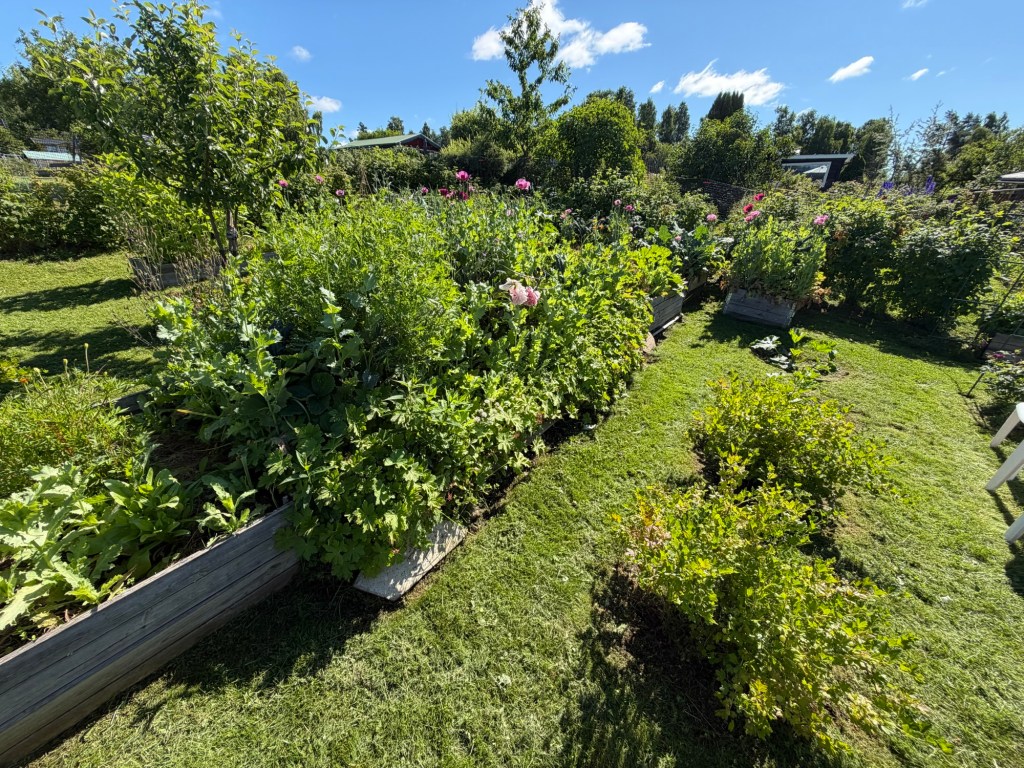
My garden can look like a mess at first sight, there’s som many things growing in each bed. I am using companion planting as a way to deter pests. Sometimes I end up having (too) many companions. Companion planting is planting two, or more, different plants next to each other to help each other. For an example, there’s currently some aphids on my roses. I treat it with soap water that I spray on them. To avoid aphids in the future I use companion planting and will be planting chives under my rosebushes. Under the plum tree, also prone to aphids (not this year) I am planting a variety of herbs, including basil and lavender. The smell of chive, tagetes (I use tagetes frequently to deter pests), and herbs with a strong scent disorients pests and masks the scent of the crops your growing that are sensitive to pests. This is organic pest control. Many of the organic pest control plants mentioned also attract an abundance of pollinators like bees and butterflies, a win/win.
Do you have a garden? If so, what is growing in your garden at the moment? If you don’t have a garden of your own, perhaps there’s a nature area or garden that you like to visit? I’d love to hear about it! Can I get you a refill on your beverage?
This post is part of the weekend coffee share. Thank you Natalie for hosting the weekend coffee share!
Maria


 GreenDreamsSweden
What’s on your mind today?