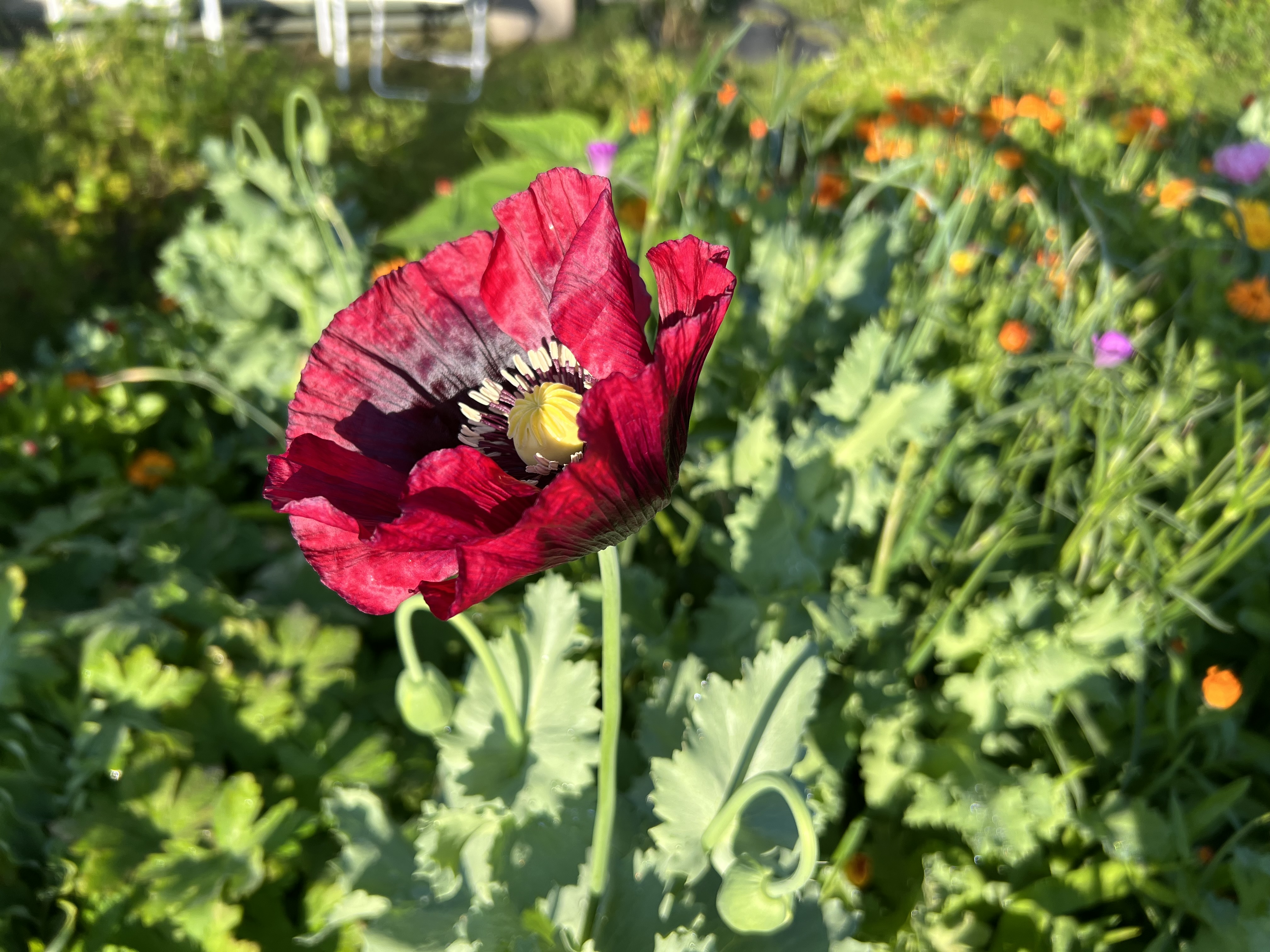
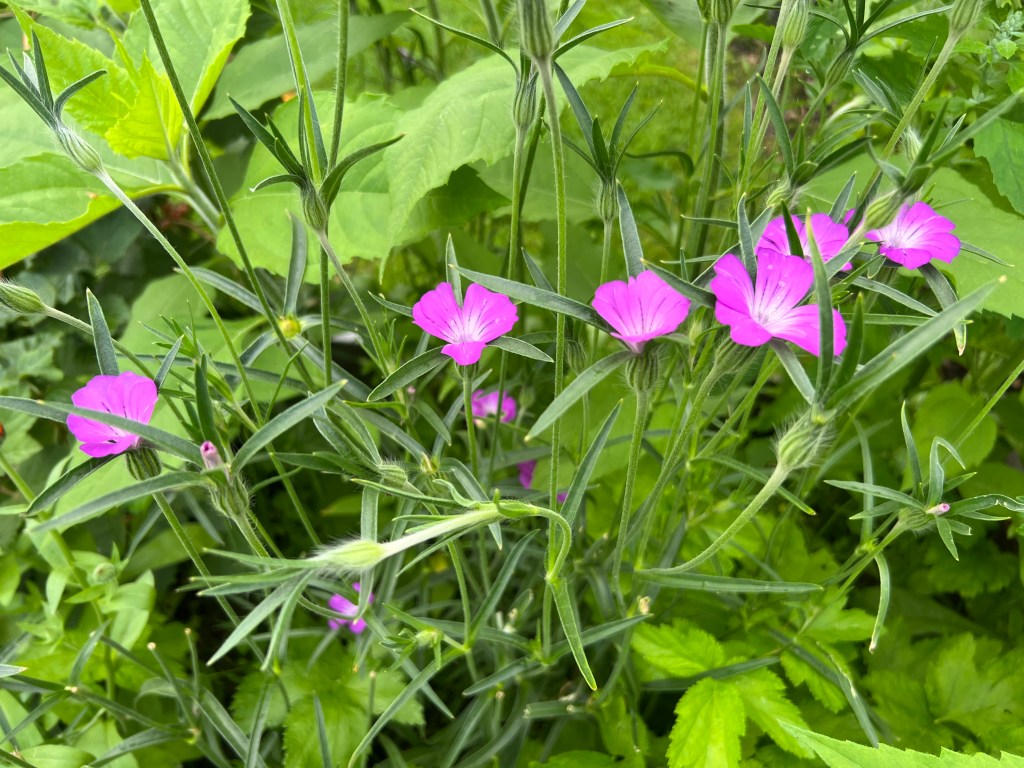
One of the most important keys to a sustainable, successful garden is companion planting. This is especially true if you have a small space to work with, like an allotment garden. My current garden is only 200 square meters/0.0494210763 acres and I try to make the most of the space.

I have a mix of raised garden beds and some in-ground garden beds, and there’s the berry bushes and two fruit trees. I use companion planting for several reasons, the obvious to make the most out of the small space, but also to attract pollinators, maintain a healthy soil and keep pests at bay. I think many gardeners, at least to begin with underestimate the benefits of planting flowers mixed in with vegetables, for pest control and to attract pollinators. I sure did not fully understand all the benefits of companion planting until I started to use it more and more. In the raised bed at the two photos above there’s marigolds and corncockle mixed with two of my favourite late fall crops; Jerusalem artichokes and parsnip. Marigolds are wonderful for their ability to deter pests in the soil and attract pollinators. When you grow parsnip the carrot fly is a common pest, but with marigolds in the same bed it is almost eliminated, in combination with all the pollinators marigolds attract the yield of parsnips will be much higher, compared to if I filled the whole garden bed with only parsnips. I have so many marigolds in my garden that I can share plenty of flowers, and later in the season seeds with my human friends in addition to the pollinators.

There is only one garden bed in my garden that has a single crop in it, and that is the garden bed with rhubarbs. Rhubarb seem to kill the other crops that I’ve tried to plant next to them. That’s OK, I do have them separated from other important crops. There’s so much to say about companion planting! One of the coolest crops for companion planting, at least in my opinion, is peas. Peas actually collect nitrogen, and release it into the soil = fertilise the soil for you! (Peas have a beneficial bacteria in their root nodules that convert atmospheric nitrogen into a form plants can use. Read about my favourite, easy to grow, sweet pea here.) Have you tried companion planting? If so, tell me about it!
Maria


 GreenDreamsSweden
Leave a reply to Eliza Waters Cancel reply